Green Earth Sciences Building, 104
367 Panama Street, Stanford, CA 94305
View map
This event is over.
Event Details:
Abstract
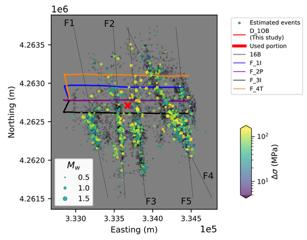
Understanding reservoir evolution is essential for developing enhanced geothermal systems (EGS). Induced seismicity carries rich information about subsurface stress changes and fracture activation during EGS development. This presentation synthesizes recent studies at Cape Station and Utah FORGE using seismic networks and borehole distributed acoustic sensing (DAS). We examine microearthquake stress drops, image fracture networks through waveform similarity, and compare focal mechanisms across earthquake sizes and monitoring scales. These observations reveal spatially variable fracture orientations and sequential activation during and after stimulation, providing constraints on reservoir heterogeneity and stress evolution. Combining low-frequency DAS with seismic observations further allows us to reconstruct fault deformation and investigate the evolving contributions of seismic and aseismic slip. Together, these complementary approaches help connect individual earthquakes to reservoir-scale processes and improve geophysical monitoring of geothermal development.
Bio
Nori Nakata is a Staff Scientist at Lawrence Berkeley National Laboratory, where he investigates subsurface fault behavior and structural changes driven by natural processes and engineered activities such as geothermal energy production, critical mineral extraction, and subsurface energy storage. His research focuses on understanding subsurface dynamics and the mechanisms of induced seismicity through field data acquisition, signal processing, artificial intelligence, and numerical modeling. He leads the development of AI-aided frameworks for geophysical imaging, forward and inverse modeling, and digital twins that integrate physics-based and data-driven approaches. Before joining Berkeley Lab, he earned a Ph.D. from the Colorado School of Mines in 2013, completed a postdoctoral fellowship at Stanford University, served as a faculty member at the University of Oklahoma, and became a Principal Research Scientist at the Massachusetts Institute of Technology.
Related Reseach/Paper
https://agupubs.onlinelibrary.wiley.com/doi/full/10.1029/2019JB018363