Green Earth Sciences Building, 104
367 Panama Street, Stanford, CA 94305
View map
This event is over.
Event Details:
Abstract
The Earth’s subsurface is fractured and highly heterogeneous, and fractures often act as preferential pathways that dominate fluid flow and solute transport. This fracture-controlled behavior strongly influences a variety of subsurface technologies including carbon and hydrogen storage, natural or stimulated hydrogen production, geothermal energy, enhanced hydrocarbon recovery, and long-term geologic disposal of spent nuclear fuel. These technologies are critical for a sustainable energy transition, but predicting flow and transport in fractured media remains difficult because attributes such as fracture geometry, roughness, and connectivity are highly variable and are hard to measure and control.
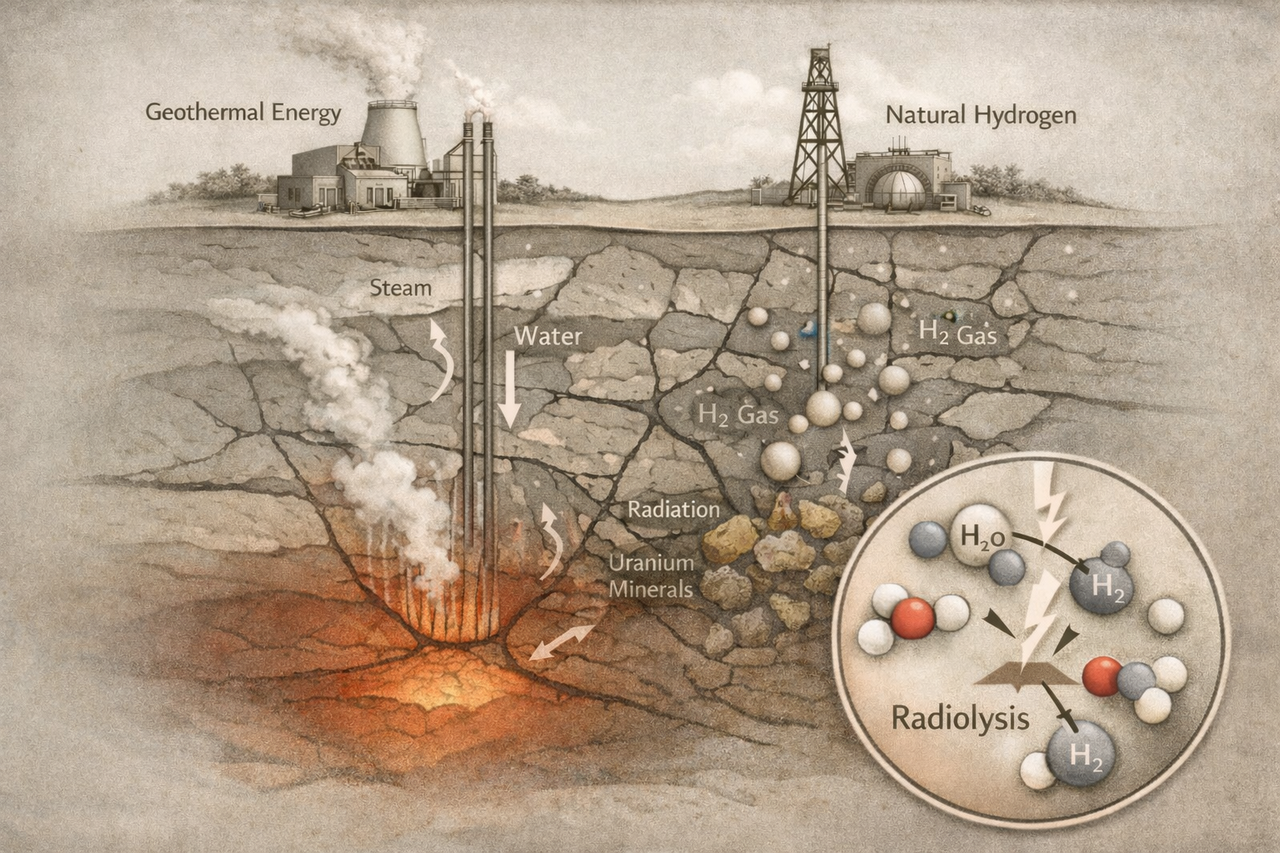
In this talk, I connect processes from the single-fracture- to the reservoir-scale using complementary experiments and modeling. At the fracture-scale, I present controlled studies in rough fractures enabled by synthetic fracture generation and repeatable 3D-printed geometries, paired with high-fidelity pore-scale simulations. These results quantify how roughness, wettability, capillary number, and viscosity ratio govern invasion dynamics, breakthrough, and transitions between stable displacement and fingering regimes, extending classic porous media displacement phase diagrams for fractures. At the reservoir-scale, I discuss examples of reservoir heterogeneity and its impact on inter-well communication, along with ongoing work on natural hydrogen, describing its impact as a clean energy resource and a modeling approach for its generation via radiolysis as the key governing mechanism.
Bio
Dr. Prakash Purswani is a Director’s Postdoctoral Fellow in the Earth and Environmental Sciences Division at Los Alamos National Laboratory (LANL). He integrates experimental and computational frameworks to understand and predict multiphase flow and reactive transport processes in porous and fractured subsurface systems, with applications to geologic carbon and hydrogen storage and natural hydrogen systems as energy transition technologies. His research combines high-pressure microfluidics, additive manufacturing, non-destructive imaging, and advanced numerical approaches, including lattice Boltzmann and reservoir modeling to investigate flow, trapping, and recovery mechanisms across pore- to field-scales. His work emphasizes the integration of experiments with physics-based and data-driven modeling to improve understanding of complex subsurface systems.
Prakash earned his Ph.D. and M.S. in Energy and Mineral Engineering from The Pennsylvania State University and his B.E. in Chemical Engineering from BITS Pilani, Hyderabad Campus. He has co-authored 20 peer-reviewed publications in leading journals including Environmental Science & Technology Letters, Geophysical Research Letters, and Lab on a Chip, and is the recipient of several honors, including the prestigious Director’s Postdoctoral Fellowship at LANL and the Gordon Research Seminar Best Poster Award.
Research/Related Papers
Application of Tracer-Based Workflow for Calibrating Reservoir Heterogeneity
https://onepetro.org/REE/article-abstract/24/03/603/449774/Application-of-Tracer-Based-Workflow-for?redirectedFrom=fulltext
pySimFrac: A Python library for synthetic fracture generation and analysis
https://www.sciencedirect.com/science/article/pii/S0098300424001481
Numerical investigation of multiphase flow through self-affine rough fractures
https://www.sciencedirect.com/science/article/pii/S0309170824002392